A Good Adaptive Trail Is Good for Everyone
Last month, KUER reporter Macy Lipkin spent some time with our crew out at North Fork Park, where we’re building a new mountain bike trail. Her story looks at how adaptive mountain biking is growing across Utah, and we’re proud to be part of it.
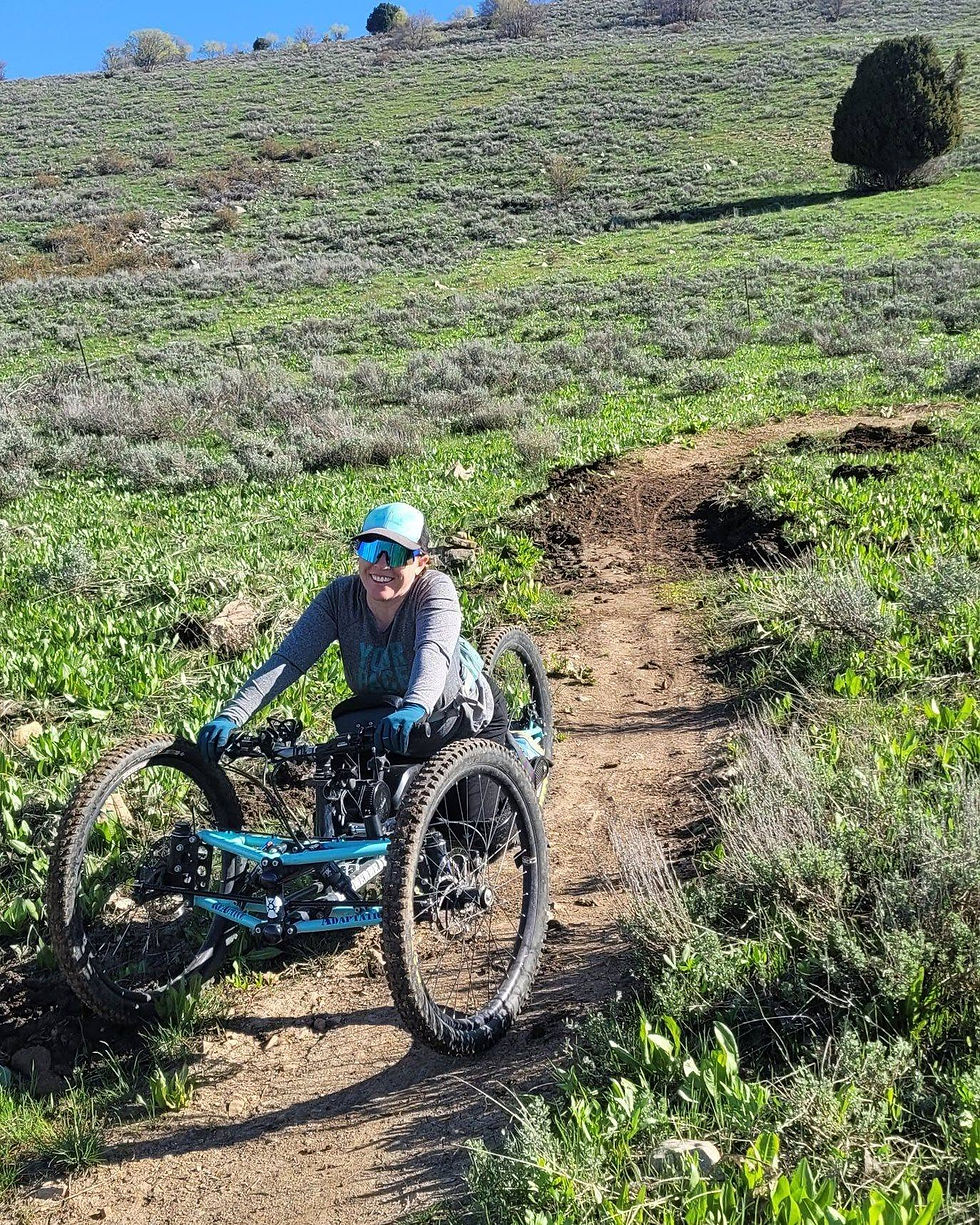
Adaptive bikes come in all shapes: hand-pedaled recumbent trikes, four-wheelers, kneeling setups, often with an electric assist. Most are wider than a standard bike, so they need more tread width, less side slope, and features wide enough for two wheels to roll through side by side.
Building that in from the start doesn’t mean dumbing a trail down. As Justin on our crew put it, flowy or technical, it works as long as you’re building with both goals in mind. Wider trails also make passing easier, give search and rescue room to work, and let us get equipment in to maintain them down the road.
We don’t follow a formal adaptive standard. Instead, we think about how different bikes will handle the terrain as we build, and we post details about finished trails so riders know what to expect before they head out. That matters a lot for adaptive riders, who can’t always just hop off and walk around an obstacle or turn around on a narrow section.
A big part of that is Kristi Prall, an Eden local who volunteers to test our new routes, like Canyon Rim at Snowbasin, on her adaptive bike. Her feedback makes our trails better for everyone. We’re also grateful to the National Ability Center, Ogden Valley Adaptive, Wasatch Adaptive Sports, and Mountain Trails Foundation for leading the way on adaptive riding in Utah.
Trails should be fun and challenging, and they should be open to people of all skill levels and abilities. A good adaptive trail is good for everyone. That’s how we want to build in Ogden Valley.
Read the full KUER story here: More Utah adaptive biking trails means more freedom in ‘those wild places’
— Alan & the EVT Crew


Comments